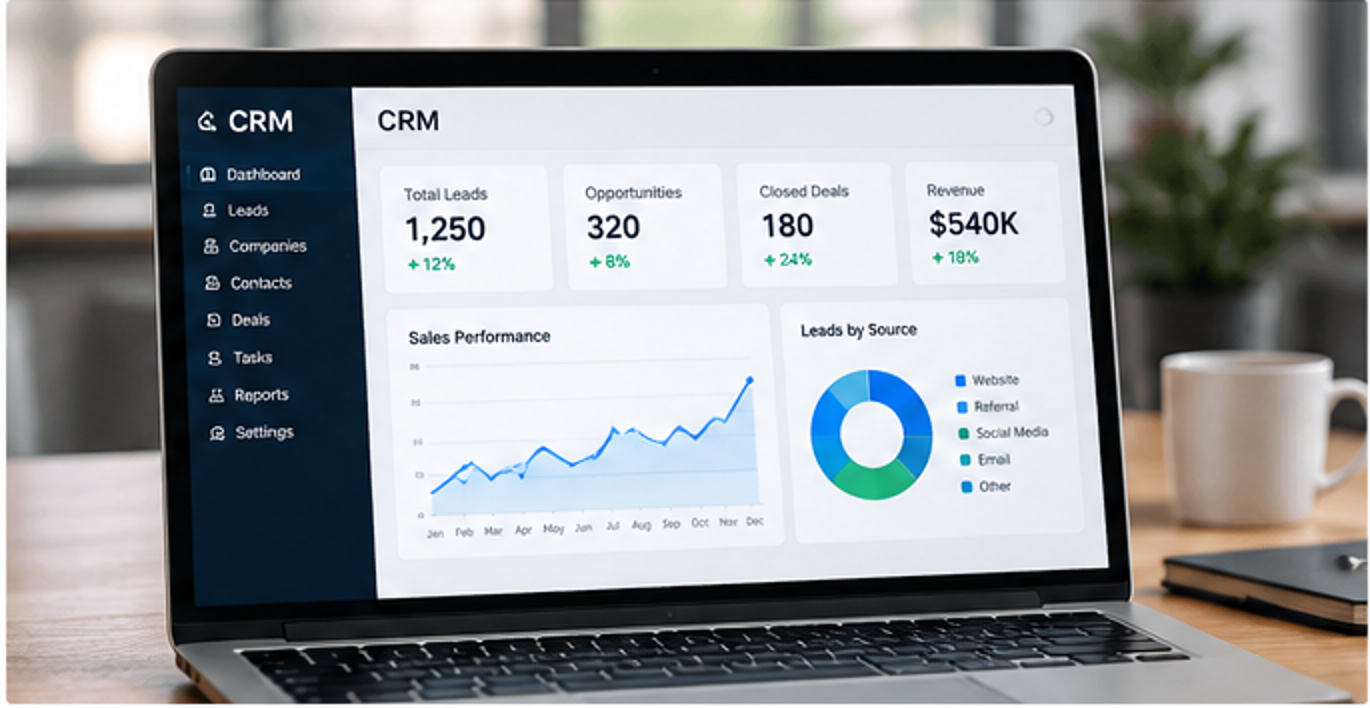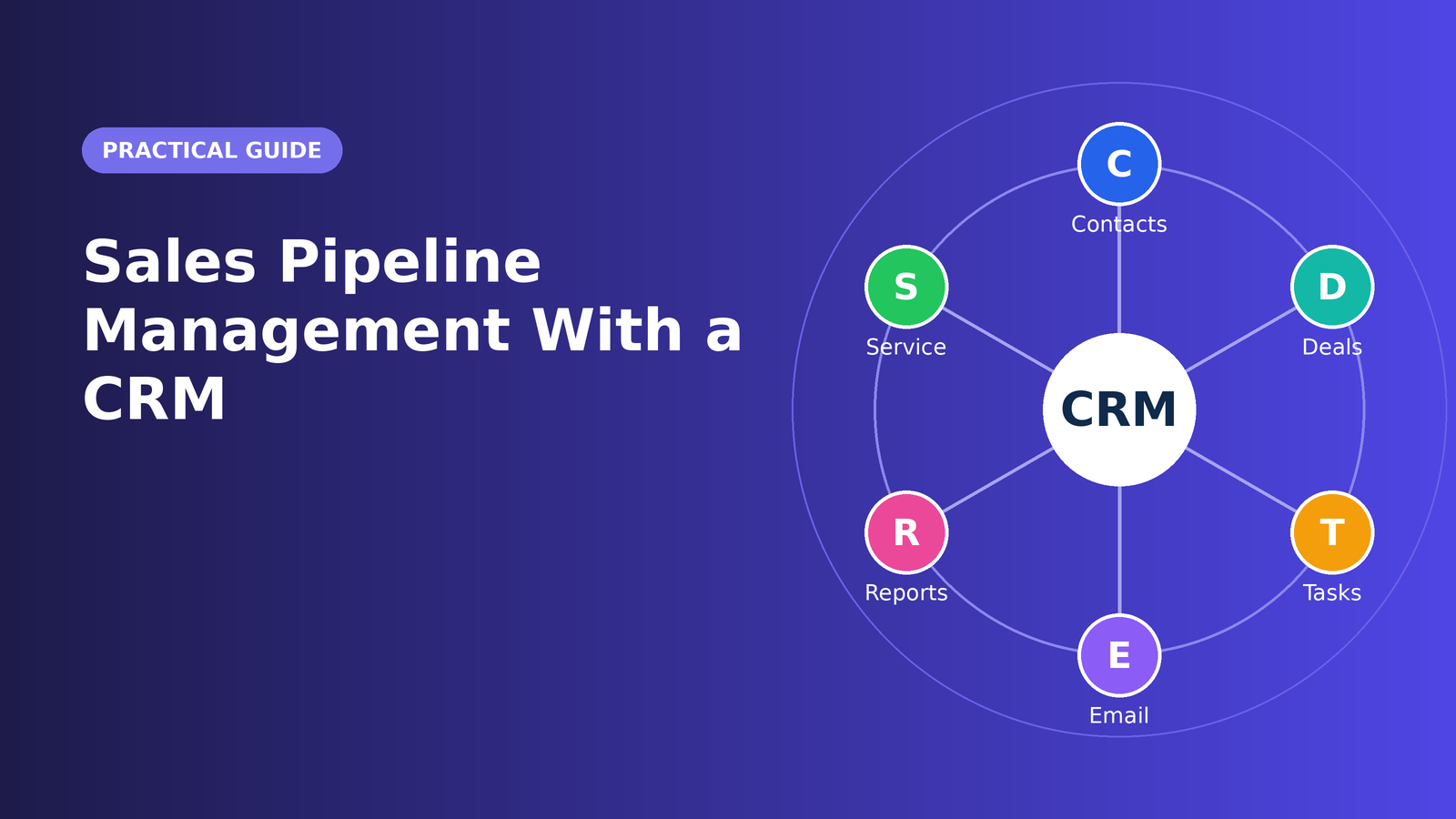
Revenue does not appear by accident. It flows through a sequence of steps: someone discovers your business, a conversation begins, a need is clarified, a proposal is made, and a decision is reached. That sequence, visualized and managed, is your sales pipeline. When it is clear and well maintained, you can predict revenue, diagnose problems, and coach your team. When it is vague, sales feels like guesswork.
A CRM is the natural home for your pipeline because it records every deal, its stage, its value, and every interaction along the way. This guide explains how to build a pipeline that reflects reality, how to track the metrics that matter, how to forecast with confidence, and how to spot and fix the bottlenecks that quietly drain revenue.
Sales Pipeline vs. Sales Funnel: What Is the Difference?
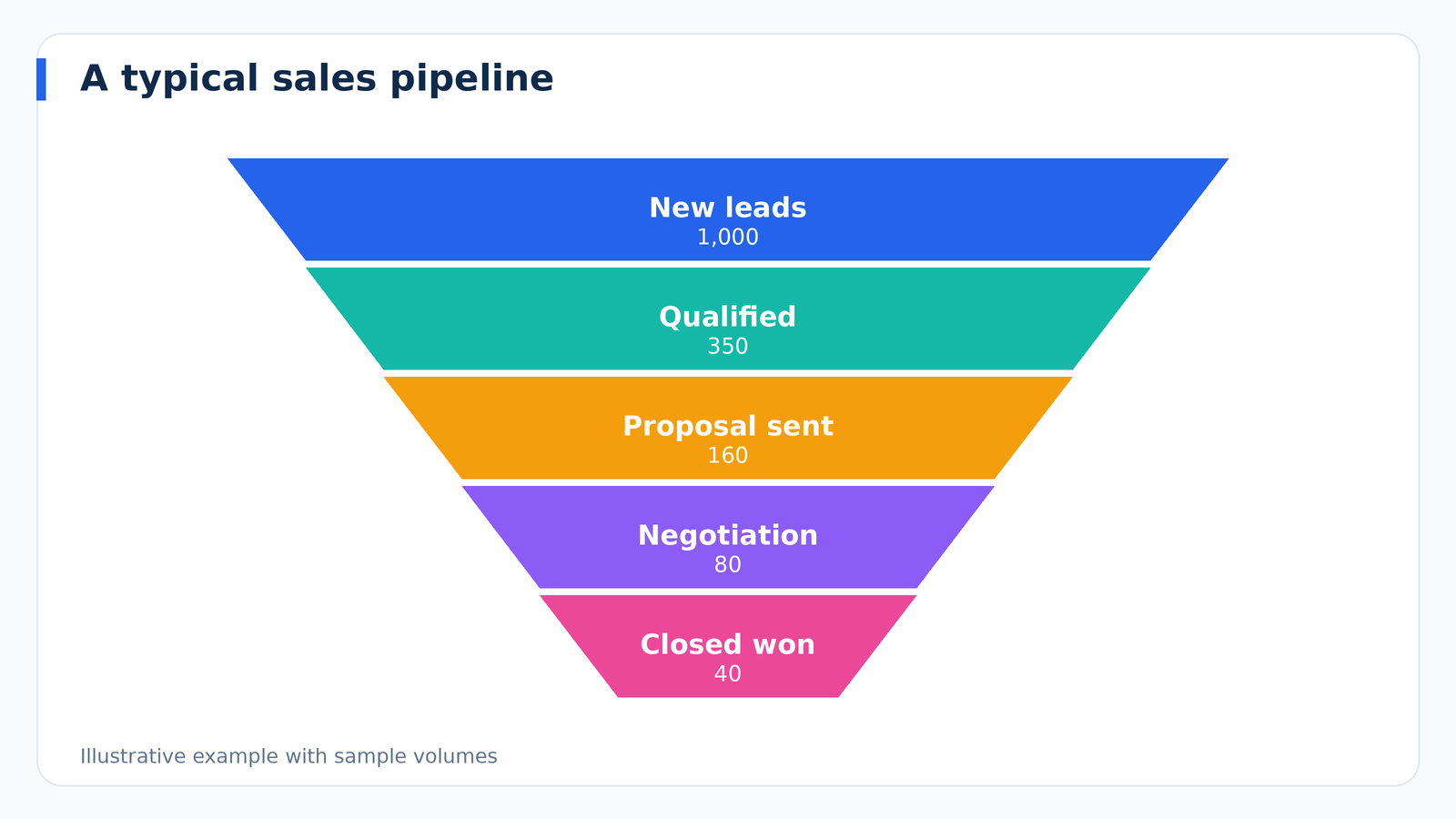
The terms are often used interchangeably, but they highlight different perspectives. A sales funnel describes the buyer’s journey: a wide top of awareness narrowing as prospects drop out before purchase. A sales pipeline describes the seller’s process: the specific stages your team moves a deal through and the actions required at each. The funnel tells you how buyers behave in general, while the pipeline helps you manage individual opportunities. A strong CRM supports both views, showing overall conversion trends and the status of each live deal.
How to Define Pipeline Stages
The quality of your pipeline depends on the clarity of its stages. Each should represent a meaningful, observable change in the buyer’s commitment, not just activity on your side. A well-designed stage answers three questions: What has happened to enter this stage? What must happen to leave it? Who is responsible?
Here is a common structure for a B2B sales process, which you should adapt to your own business:
- New Lead. A person or company has shown interest or been identified, but has not been contacted or evaluated.
- Contacted. You have made two-way contact, such as a reply to an email or a phone conversation.
- Qualified. You have confirmed a real need, budget range, authority to decide, and a timeline.
- Discovery or Demo Completed. You have explored requirements in depth or shown the solution.
- Proposal Sent. A written quote or proposal is with the buyer.
- Negotiation. Terms, pricing, or scope are being discussed.
- Closed Won. The deal is signed.
- Closed Lost. The deal is dead, and the reason is recorded.
Notice that each stage is defined by buyer evidence. “Sent three emails” is activity. “Buyer confirmed budget” is progress. Pipelines built on evidence produce far more reliable forecasts.
How Many Stages Should You Have?
Five to eight stages work well for most teams. Fewer than five hides important details, while more than eight creates friction and confusion about where a deal belongs. If your reps argue about which stage a deal is in, simplify.
Qualification: The Most Important Step
Pipelines clog when unqualified opportunities linger. Qualification is the discipline of deciding whether a lead deserves your time. Frameworks help standardize the conversation. One widely used approach is BANT, which examines Budget, Authority, Need, and Timeline. Others, such as MEDDIC, examine metrics, economic buyer, decision criteria, decision process, pain, and champion, and are common in complex enterprise sales. Choose a framework, build its questions into CRM fields, and require key answers before a deal can advance. This keeps the pipeline honest.
Key Pipeline Metrics to Track in Your CRM
Metrics turn the pipeline from a picture into a management tool. These are the numbers worth tracking.
Pipeline Value
The total value of open deals, often shown by stage. It reveals whether you have enough opportunity to reach your targets. Many teams look for pipeline coverage, the ratio of pipeline value to the revenue goal, to judge whether more prospecting is required.
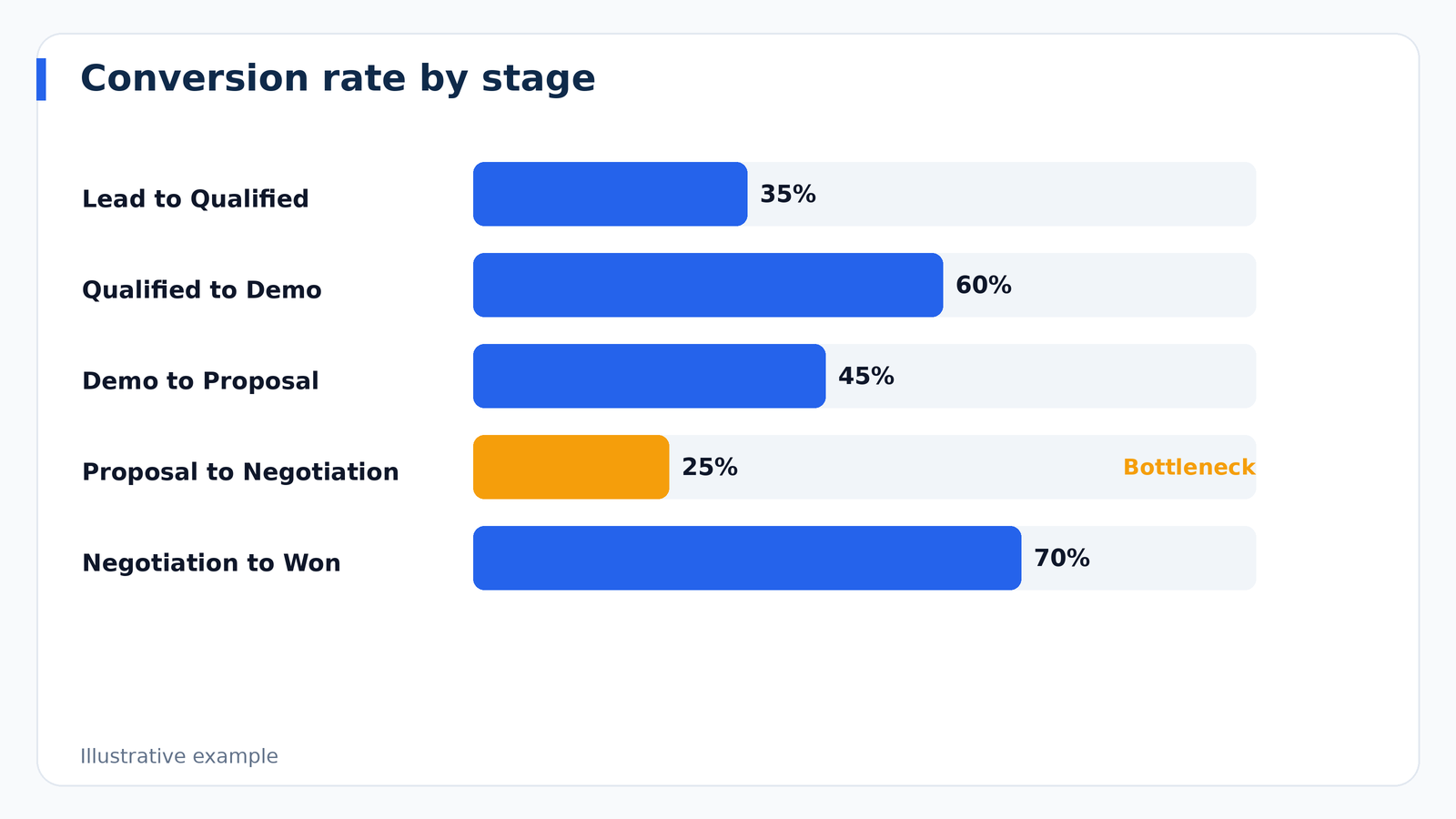
Conversion Rate by Stage
The percentage of deals that advance from one stage to the next. A sudden drop at a particular stage pinpoints where to investigate, whether that is weak qualification, a confusing demo, or pricing objections.
Win Rate
The percentage of opportunities that close as won. Tracking it by lead source, rep, deal size, and industry shows where you are most effective.
Average Deal Size
The mean value of won deals. Increasing it, through bundling or better qualification, can raise revenue without needing more leads.
Sales Cycle Length
The average time from creation to close. Longer cycles tie up resources and delay revenue. Comparing cycle length by segment shows which customers are fastest to convert.
Deal Velocity
A combined measure that considers the number of opportunities, average deal size, win rate, and cycle length. It indicates how quickly your pipeline produces revenue, and improving any single component improves velocity.
Stalled Deals and Deal Age
Deals that sit too long in a stage without activity are warning signs. Many CRMs can flag opportunities with no scheduled next step or no activity for a set number of days.
Forecasting With Your CRM
Forecasting converts the pipeline into a prediction. Accuracy depends on consistent data, so everything above feeds into it. Common methods include:
Weighted pipeline. Assign a probability to each stage, based on your historical conversion rates, and multiply by deal value. A deal worth a given amount at a 40 percent stage contributes 40 percent of that value to the forecast. This is simple and effective, as long as probabilities come from real data rather than optimism.
Historical trend analysis. Look at past periods to see how much of the pipeline at a given point typically closed. This helps calibrate expectations.
Rep-submitted forecasts. Salespeople categorize deals as commit, best case, or pipeline. Because this relies on judgment, combine it with data to reduce bias.
The best teams compare forecasts with actual results every period and adjust. Over time, the gap narrows, and revenue planning becomes more dependable.
Best Practices for Managing the Pipeline
Always Have a Next Step
Every open deal should have a scheduled next action with a date. Deals without one drift and die. Configure your CRM to flag open opportunities that lack a task.
Update Records in Real Time
The pipeline is only as good as its freshness. Encourage reps to update after each interaction, and use automatic logging for emails and calendar events to reduce effort.
Hold Regular Pipeline Reviews
Weekly reviews keep deals moving. Focus on the biggest opportunities, the stalled ones, and those expected to close soon. Run the meeting directly from the CRM so the data is reinforced as the source of truth.
Clean Out Dead Deals
Old, inactive opportunities inflate pipeline value and distort forecasts. Set a rule, such as closing deals with no activity after a certain period, and require a loss reason. Loss reasons are valuable data, revealing patterns in pricing, competition, and timing.
Use Automation to Remove Friction
Automate repetitive tasks such as creating follow-up reminders when a deal moves stages, sending internal alerts for high-value deals, and generating documents. Less administration means more selling time.
Standardize and Coach
Document what good looks like at each stage, and use CRM data to coach. If one rep has a high conversion from demo to proposal, learn what they do differently and share it with the team.
Finding and Fixing Pipeline Bottlenecks
A bottleneck is a stage where deals pile up or disappear. Your CRM helps you find it, and a few common patterns suggest the cause.
Too many leads, too few qualified. The top is full but few leads advance. This suggests unclear targeting or weak lead sources. Tighten your ideal customer profile and refine qualification questions.
Deals stall after the demo. Buyers like the product but do not move forward. Consider whether decision makers were involved, whether the business case was clear, and whether next steps were agreed upon before the meeting ended.
Proposals go unanswered. A quote alone rarely closes a deal. Follow up quickly, offer a walkthrough, and address objections proactively.
Late-stage losses. Deals that die in negotiation often reveal pricing or competitive issues, or a missing economic buyer. Analyze loss reasons for a pattern.
Long cycles. Slow movement may result from complex approval processes or unclear urgency. Mapping the buyer’s decision process early can shorten the timeline.
Pipeline Management for Different Business Models
The principles are universal, but the details vary. A high-volume, low-ticket business may emphasize speed and automation, with short cycles and simple stages. An enterprise seller manages fewer, larger deals with multiple stakeholders, so contact roles and deal-level planning matter more. Subscription companies often run parallel pipelines for new business, upsells, and renewals. Service providers frequently track proposals and scheduling stages. Design your CRM pipeline to reflect your model rather than forcing a generic template.
Common Pipeline Management Mistakes
- Counting hope as pipeline. Optimistic stage placement makes forecasts unreliable.
- Allowing incomplete data. Missing close dates and values break reports.
- Too much focus on volume. A bloated pipeline hides poor quality. Focus on conversion and velocity.
- Ignoring closed-lost data. Losses contain some of your best lessons.
- Managing outside the CRM. Side spreadsheets fracture the truth.
- Never revisiting stages. Your process evolves, and your pipeline should as well.
Frequently Asked Questions
What is a healthy pipeline coverage ratio?
It depends on your win rate. If you close about one in four opportunities, you need roughly four times your target in pipeline. Calculate it from your own historical numbers rather than relying on a universal rule.
How often should the pipeline be updated?
Ideally after every meaningful interaction, and at minimum before each weekly review. Automation for emails and meetings makes this far easier.
Can a small business benefit from formal pipeline management?
Absolutely. Even a simple five-stage pipeline in a CRM provides clarity on which leads need attention and what revenue to expect.
What is the difference between a lead and an opportunity?
A lead is a potential customer who has shown interest or fits your profile. An opportunity is a qualified lead with a real chance of becoming a sale, usually with an estimated value and close date.
Final Thoughts
Great pipeline management is built on clear stages, honest qualification, consistent data, and regular review. Your CRM provides the structure and the metrics, but the discipline comes from your team. Define stages by buyer evidence, track conversion and velocity, keep a next step on every deal, and learn from wins and losses alike. As your pipeline becomes more predictable, you will find it easier to plan hiring, investment, and growth with confidence.